OPD says public can’t see video showing how Doug Martin died
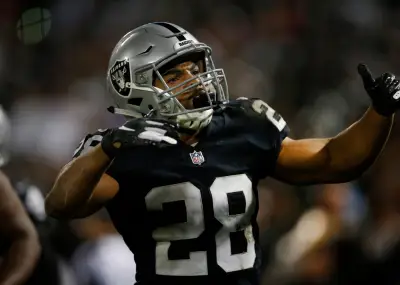
OAKLAND Leadership here have explained little about the mid-October death of former NFL running back Doug Martin only describing it as an in-custody death after a brief struggle with Oakland police officers The Oakland Police Department has refused to release dispatch recordings that would shed more light on the moments leading up to the -year-old becoming unconscious after officers unveiled him inside one of his neighbors houses in the Oakland hills Now OPD executives on Tuesday argued the encounter did not amount to a critical affair a key threshold that would require the agency to release officer body-camera video The OPD s response to this news organization s inhabitants records request for the footage came at the -day deadline enshrined in a state law to boost police accountability At this time the City has determined that the event does not meet the definition of a critical circumstance ' read an unsigned report from OPD which cited AB the law signed in Therefore the mandatory disclosure provisions applicable to critical incidents do not apply The refusal to release the footage drew an immediate rebuke from First Amendment and police accountability advocates who questioned the police department s lack of transparency in the affair but acknowledged the department might not have to release the videos AB defines critical incidents as instances when officers fire their guns or when the use of force by a peace officer or custodial officer against a person resulted in death or in great bodily injury Transparency is the oxygen of accountability David Loy legal director of the First Amendment Coalition announced The community has an overwhelming interest in how the leadership does their job especially how police officers do their job Even if they re not legally required to release it there s no reason I believe they should not release the video Sparse facts have been publicly published six weeks after Martin s death Shortly after a m on Oct multiple people called as Martin banged on his neighbors front doors and wandered through the backyards of houses on the block of Ettrick Street The former running back for the Tampa Bay Buccaneers and Oakland Raiders had been staying in a longtime family home on the block which rests in the Oakland hills near the Oakland Zoo Police initially received a call about a person urgent into an occupied home on Ettrick Street They simultaneously received notice that a person assumed to be a burglar was having a biological crisis according to a announcement distributed at the time by the OPD A brief struggle with Martin ensued when officers contacted him inside a house and tried to detain him police commented Martin then became unresponsive after being taken into custody according to Oakland police Police have not described the nature of Martin s struggle with an unknown number of officers who haven t been identified whether he declared anything to them and the length of time he spent in custody before falling unconscious The Alameda County Coroner s Office has not completed Martin s autopsy His brain is expected to be preserved and examined by neurologists for evidence of chronic traumatic encephalopathy or CTE Several families of deceased NFL players have taken the same measures to determine if repeated hits to their loved ones heads caused a illness that can only be determined after death but has been unveiled in hundreds of former NFL players in current years and at times linked to severe mental illness Martin s family who have spent the week preparing for Martin s memorial amenity scheduled for Thursday declined to comment It is unclear if his family was allowed to view the body-camera footage Tampa Bay Buccaneers running back Doug Martin walks off the field after a staggeringly thriving day against the Oakland Raiders in an NFL football match Sunday Nov at O co Coliseum in Oakland Calif Martin rushed for yards and four touchdowns as the Buccaneers won - D Ross Cameron Staff Born in Oakland Martin grew up playing football and was a star at St Mary s in Stockton before spending four years at Boise State where he left in as the third-leading rusher in undertaking history His rookie season in Tampa Bay was his the bulk productive as a pro The back nicknamed Muscle Hamster for his eagerness to take on physically taxing assignments rushed for yards and touchdowns that season earning his first of two career Pro Bowl appearances His NFL career was also marred by injuries and off-field challenges In Martin was suspended four games for violating the NFL s substance abuse protocol after testing positive for a banned substance He later sought cure and publicly expressed regret vowing to rebuild his medical and reputation He quietly retired after the season and had lived a private life until the fall encounter with Oakland police His death also came as the OPD which has been under federal court-ordered monitoring for two decades has faced renewed scrutiny over its transparency Just days before Martin s death the police department began encrypting its radio channels a decision that proved deeply controversial given how those radio feeds had been open for decades while providing a key window into crime across the city Because of the switch the citizens could not listen in or review the calls and the police s response When OPD joined other East Bay agencies in silencing the radio feeds Oakland City Administrator Jestin Johnson vowed to make his city s police conversations easily available to the general In a late-August comment Johnson stressed that we also need to maintain transparency and accountability to the general amid the push for encryption while adding that we are committed to making sure when there are requests for this information that the department is responsive He also promised to prioritize requests from news media to ensure timely release of those records to reporters covering Oakland But the city has refused to release the recordings Civil rights attorney Jim Chanin a lead attorney in the landmark Riders development of the early s that forced the OPD into federal oversight reported he saw no reason to withhold release of the body-camera footage regardless of whether it fell under the purview of AB I have the point of view that when in doubt release it Chanin explained And that s my point of view in this scenario If officers acted within the bounds of department protocol then the videos could help show that added Loy of the First Amendment Coalition That s precisely what people have the right to decide for themselves he mentioned Jakob Rodgers is a senior emerging news reporter Call text or send him an encrypted message via Signal at - - or email him at jrodgers bayareanewsgroup com